




Claude API Skill Onboards Managed Agents Fast
The fastest way to use the new API credits is through Claude Managed Agents. Running /claude-api managed-agents-onboard inside Claude Code walks users through setup.
ClaudeDevs·Thu, Oct 8 12:09pm ET
The fastest way to use the new API credits is through Claude Managed Agents. Running /claude-api managed-agents-onboard inside Claude Code walks users through setup.
Max and Team subscribers now get monthly Claude Platform API credits: $100 for Max 5x, $200 for Max 20x, and up to $500 pooled for Team plans. Credits work across any Claude model, including Haiku 5.5, in your own code or third-party tooling.
Cache read pricing for Sonnet 5.5 on the Claude API drops to $0.10 per million tokens, down from $0.20. Combined with existing input ($2/M) and output ($10/M) rates, this makes most agentic workloads roughly 20% cheaper. The change is API-only and does not affect Claude Code usage limits.
The new Claude Projects feature is rolling out gradually. A waitlist is available for those who want early access.
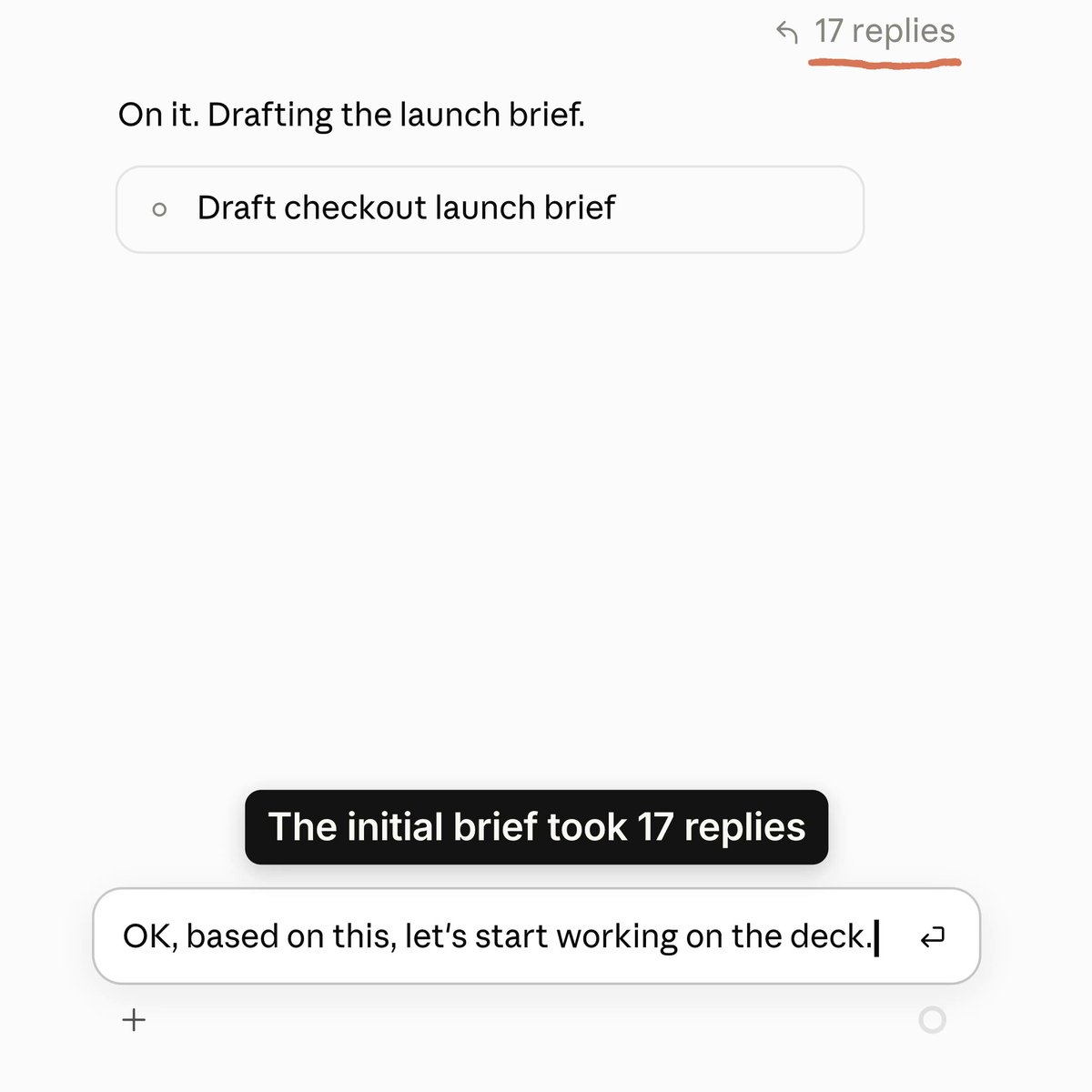
Work starts in a main chat, branches into focused threads, and when a thread insight applies globally, Claude can elevate it to a project-wide instruction automatically.
A workflow where project-wide instructions emerge organically: start with open-ended jam sessions in the main chat, move specific topics to threads, then promote anything broadly applicable into project-level instructions. The result is a system that feels less like prompt engineering and more like teaching through conversation.
As project knowledge accumulates, shorter prompts produce better results because Claude already knows the context. The richer the project memory, the less you need to re-explain.
When working across many threads and plans shift, you can tell Claude what changed and it figures out which project documents are affected and updates them accordingly.
A useful trick for Claude Projects: prompt Claude to read your team's comments across external docs and tools, then internalize that context as project knowledge.
Two new Claude capabilities are now in beta: Dashboards turns your data into live, interactive dashboards, and Motion converts ideas into animated explainers. An Anthropic team member's reaction suggests internal enthusiasm.
A user claimed Claude Code was leaking data to the US government after finding .gov strings in the Claude Desktop binary. Anthropic's Brian Cherny clarified these are standard AWS region endpoints from the AWS SDK used for Bedrock customers, not government surveillance infrastructure.
A user on the Max 20x plan noticed their Opus 5.5 (high) usage depleting two to four times faster since a recent rollout. An Anthropic team member asked for a /feedback session ID or account email to investigate.
Responding to a discussion about programmer vs. non-programmer vibe-coding advantages, trq212 identifies the real bottleneck: people working outside their domain who can't be precise with prompts and plans end up burning many turns iterating vaguely.
Following a point about imprecise prompting being the top failure mode, trq212 notes that because agents lower the barrier to entry, nearly everyone eventually works outside their domain. The practical fix: just ask the model to explain the unfamiliar concepts directly.