AnthropicFigmaLinearVercelStripeShopifyPostHogDatadogRampSeatGeekSierraHexTurbopufferAnthropicFigmaLinearVercelStripeShopifyPostHogDatadogRampSeatGeekSierraHexTurbopuffer
NVDA$1,234.56+1.23%
NVDA$1,234.56+1.23%
NVDA$1,234.56+1.23%
NVDA$1,234.56+1.23%
NVDA$1,234.56+1.23%
NVDA$1,234.56+1.23%
NVDA$1,234.56+1.23%
NVDA$1,234.56+1.23%
NVDA$1,234.56+1.23%
NVDA$1,234.56+1.23%
The Claude Code Daily
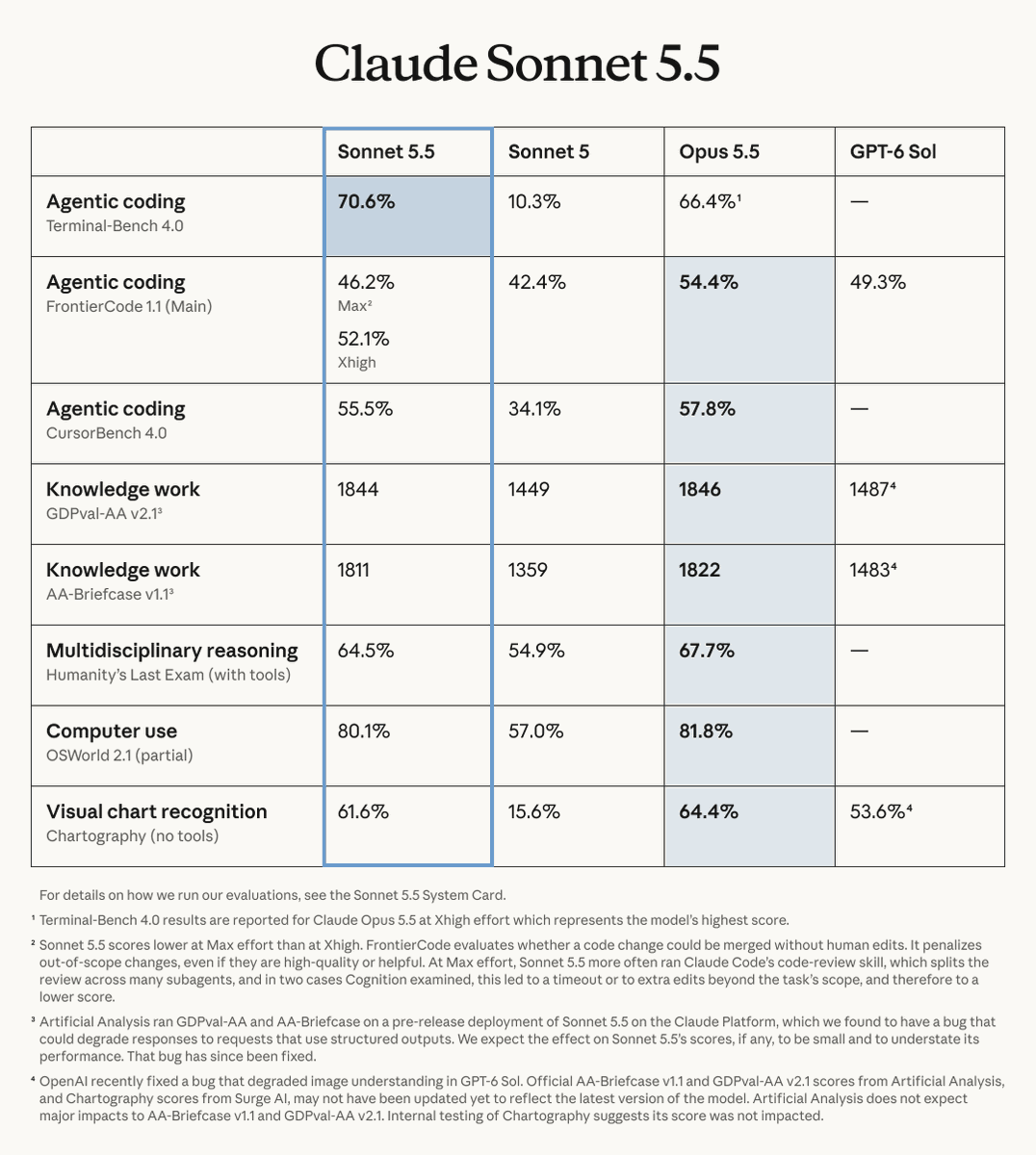
Sonnet 5.5 benchmark comparison chart

Sonnet 5.5 Lands in Claude Code With 30% Speed Gain

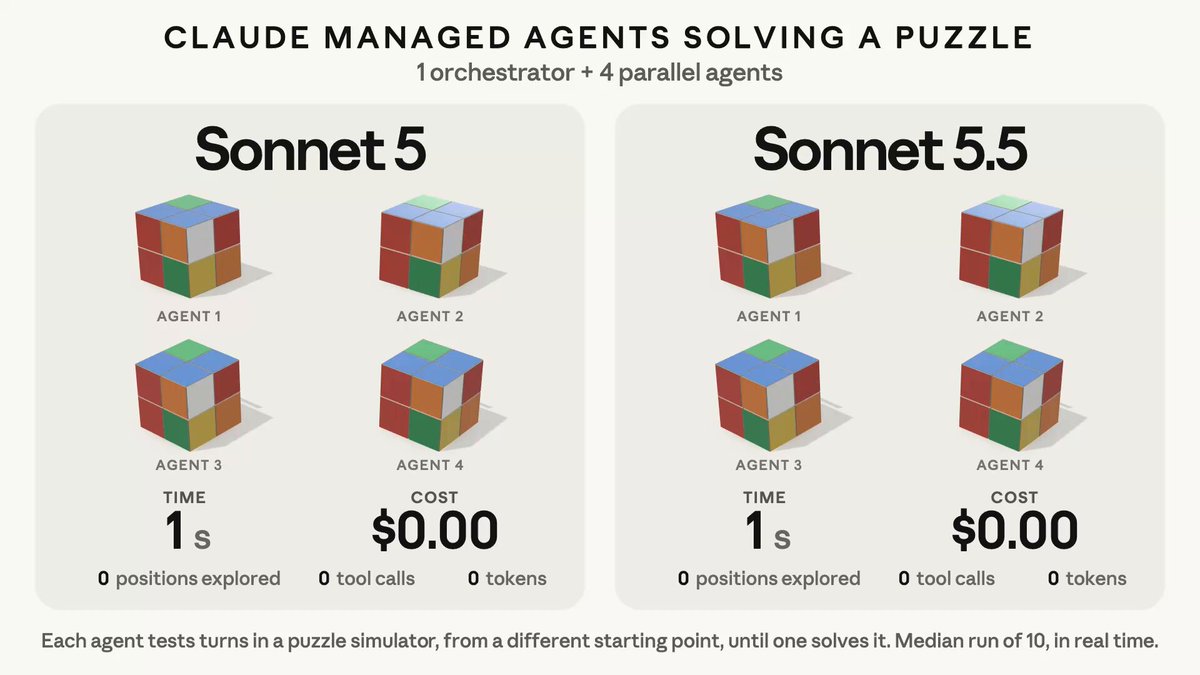
Sonnet 5.5 is smarter and 30% faster than Sonnet 5, with up to 30% lower cost for most work. The recommended use case is everyday, well-scoped tasks: fixing bugs, iterating on features.

ClaudeDevs·Mon, Sep 28 2:36pm ET

Sonnet 5.5 Pricing Holds at $2/$10 Per Million Tokens

Sonnet 5.5 is priced identically to Sonnet 5: $2 per million input tokens, $10 per million output tokens, with cache reads at $0.20. Thinking is always on, but can be disabled upfront using the `between_tools` parameter. A migration guide is available.

ClaudeDevs·Mon, Sep 28 2:36pm ET

Sonnet 5.5 Now Live; Pro and Max Reset Still Available

Sonnet 5.5 is available on the Claude Platform and in Claude Code. Pro, Max, and Team users received a usage reset last Tuesday; any unused reset can be applied any time before October 22.

ClaudeDevs·Mon, Sep 28 2:36pm ET

Sonnet 5.5 Gets Anti-Distillation Thinking Protection

Preserved thinking in Sonnet 5.5 now stays tied to the originating org. If a user switches accounts mid-session, the model discards the cached thinking and regenerates it fresh, preventing distillation attacks via account-switching.

ClaudeDevs·Mon, Sep 28 2:36pm ET

Sonnet 5.5 Rivals Opus 5.5 at a Fraction of the Cost

Sonnet 5.5 gets very close to Opus 5.5 on coding and agentic benchmarks while being noticeably cheaper and faster. Opus remains the preferred pick for long-horizon or especially gnarly problems; Sonnet 5.5 is recommended for nearly everything else.

adocomplete·Mon, Sep 28 2:23pm ET

Sonnet 5.5 Usage Guide: Effort, Defaults, and Opus Threshold

For Sonnet 5.5, Claude apps default to medium effort and the Platform defaults to high. Pushing Sonnet to max effort degrades the speed/cost balance, at which point Opus becomes the better pick. Recommended use: Opus for large or open-ended projects, Sonnet for well-defined goals.

ClaudeDevs·Mon, Sep 28 2:36pm ET

Opus vs. Sonnet 5.5: When to Use Each

Opus 5.5 suits open-ended, exploratory tasks where the destination isn't clearly defined. Sonnet 5.5 shines when goals and desired outputs are well-specified up front.

adocomplete·Mon, Sep 28 4:24pm ET
More Stories

Modern Prompts Are Now Untransferable Collections of Context

Effective agent prompts today can't be shared as simple text strings. They typically reference multiple repos, web search results, external AI APIs, and curated examples. The "show me your prompt" question has become essentially unanswerable in the traditional sense.

trq212·Mon, Sep 28 12:26pm ET

Transcript Sharing Still Misses File and Web Context

In response to a suggestion that sharing full conversation transcripts (similar to a Codex feature) would help reproduce agent sessions, the counterpoint is that transcripts alone still omit the local files and live web service results that shaped the actual context.

trq212·Mon, Sep 28 2:24pm ET

Open Source Claude Code Plugin for Code Modernization

Code modernization at scale is now achievable with agents. A Claude Code plugin has been open-sourced to help teams get started, paired with a talk covering how work that once cost millions and took years can now be handled by agents.

morganlunt·Mon, Sep 28 12:29pm ET

Claude Agent Caught Playing Factorio Mid-Task

A Claude agent, apparently given some autonomy, started playing Factorio during a session. The screenshot suggests the model found a way to launch and interact with the game rather than complete its assigned work.

adocomplete·Sun, Sep 27 9:21pm ET

Get the daily digest in your inbox

Every weekday morning. Unsubscribe anytime.