




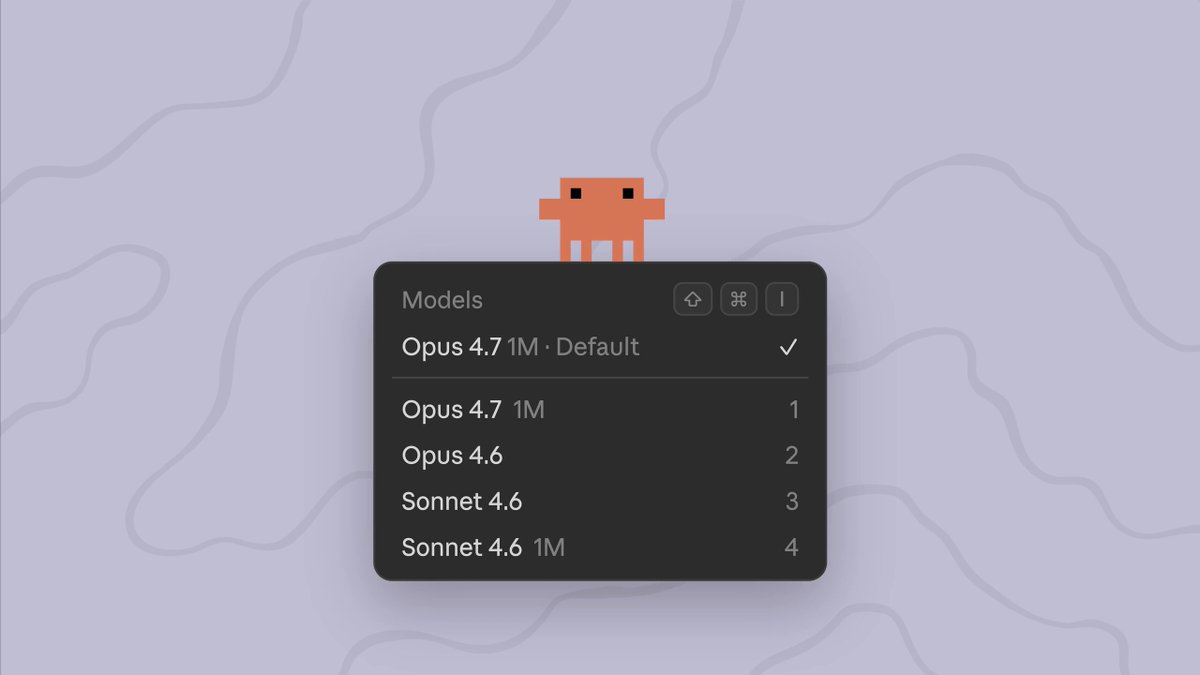
Fast Mode Now Defaults to Opus 4.7
Fast mode in Claude Code now defaults to Opus 4.7. Accessible via the /fast slash command starting today.
ClaudeDevs·Mon, May 18 3:18pm ET
Fast mode in Claude Code now defaults to Opus 4.7. Accessible via the /fast slash command starting today.
The technique pairs a normal implementation request with an instruction to maintain a living implementation-notes.html (or markdown) file capturing decisions, tradeoffs, and deviations from the spec as they happen. It's a lightweight way to stay in the loop without micromanaging every step.
A talk from Code with Claude explores how to keep users informed and in control during long-running agent tasks. The focus is on practical patterns for agent observability rather than just letting agents run and hoping for the best.
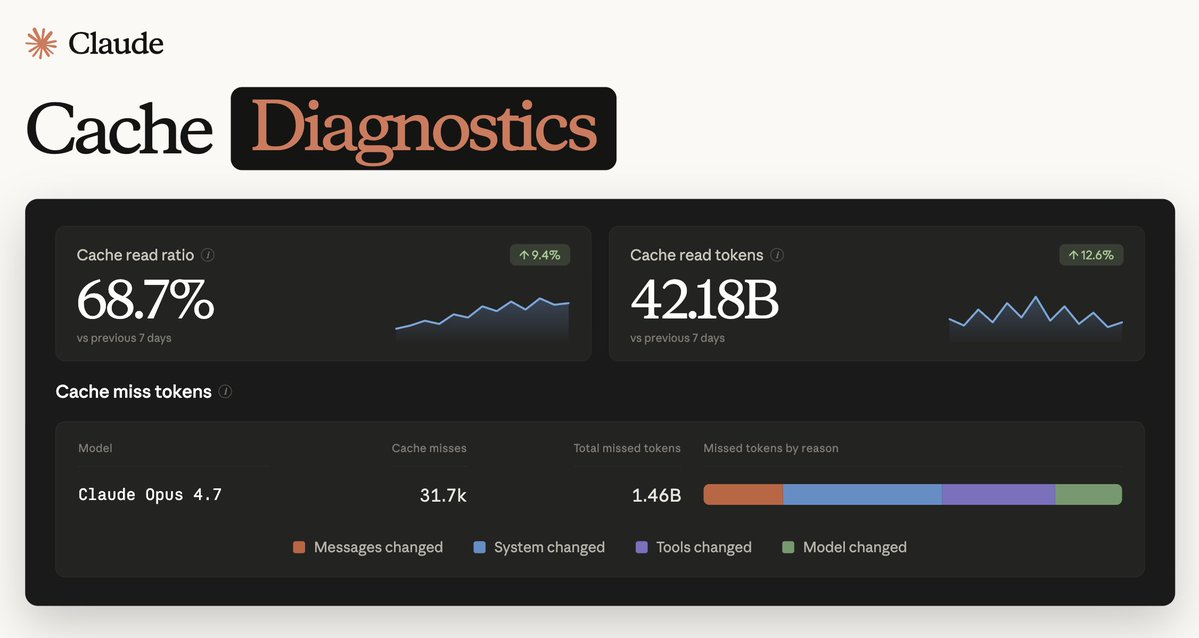
When a request misses the prompt cache, Claude Console now highlights which part of the prompt changed and shows the token cost of the miss. Useful for debugging cache behavior without guesswork.
Prompt cache diagnostics are now available in Claude Console, with docs linked for deeper reading. This is the follow-up link tweet to the feature announcement.
No spec survives contact with implementation. The implementation-notes file gives the model a sanctioned way to handle unknowns and edge cases while keeping the human informed rather than silently guessing.
A prompt asking Claude to implement a spec while maintaining a running implementation-notes file went somewhat viral; the author used Claude to clean up the original messy wording for a second pass.
Keeping specs small enough to finish in one assistant turn is the approach here, with implementation notes scoped to match. The question of whether to keep a working log around continuously is left open to the other person's workflow.
A JavaScript engine fuzzer runs continuously, automatically sending its reports to Claude, which then submits multiple pull requests per day. It's a closed-loop automated bug-fix pipeline with no human in the middle.