




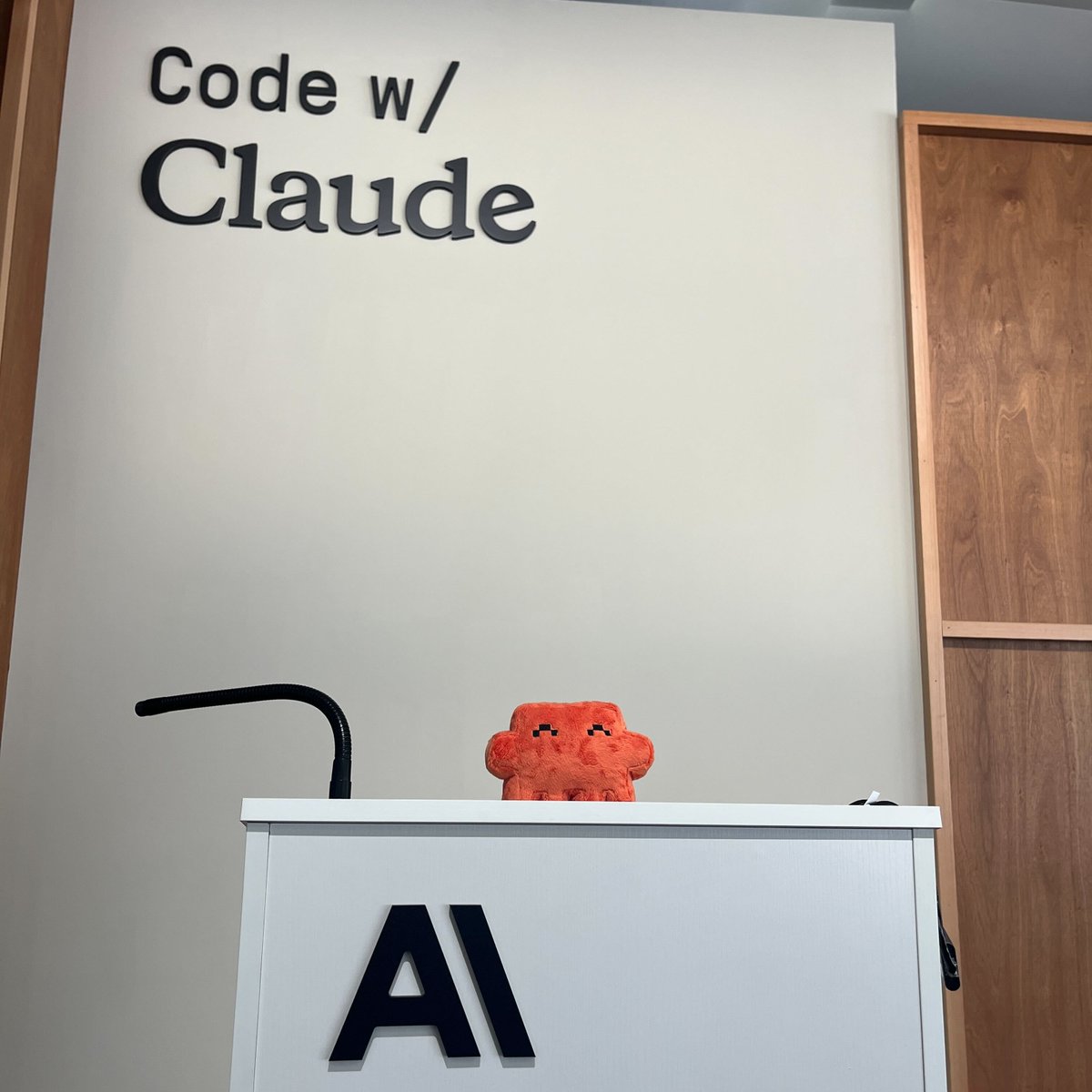
Code With Claude San Francisco Event Wraps Up
The in-person Code with Claude San Francisco event has concluded. The official account thanked both attendees and remote viewers.
ClaudeDevs·Thu, May 7 8:50pm ET
The in-person Code with Claude San Francisco event has concluded. The official account thanked both attendees and remote viewers.
Following last week's 50-fix batch, another 60+ reliability improvements landed covering long-running sessions, the agent loop, auth edge cases, and terminal rendering. The thread breaks them into categories.
`claude -p` now handles more than 10MB of piped stdin. Requests resume cleanly after a Mac wakes from sleep, a stdio MCP server writing garbage to stdout no longer causes memory to balloon past 10GB, and output appears reliably after thinking completes.
Sub-agent summaries now hit the prompt cache, opt-in 1-hour prompt caching is honored correctly, parallel shell calls keep running when a read-only sibling fails, and 1M-context sessions finally use their full window before hitting the "Prompt is too long" error.
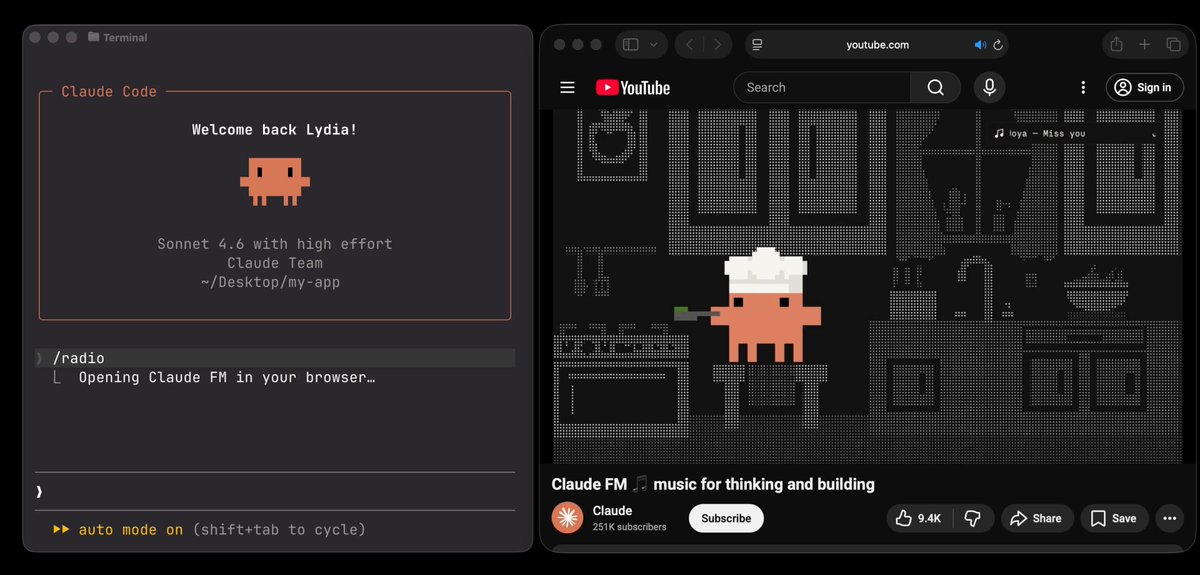
A new /radio slash command has appeared, shared with an accompanying image. Details are sparse, but the command appears to be a fresh addition to the Claude Code slash command roster.
Free Claude Dev sticker packs are available while supplies last, offered as a consolation for anyone who missed the recent in-person event.
A workflow shift: using Claude Code to generate HTML instead of writing markdown files, with the argument that HTML is simply better for almost everything markdown is used for. The tweet includes a visual explanation.
A companion link to example HTML documents generated via Claude Code, offered as evidence for the HTML-over-markdown workflow.
A follow-up in an ongoing thread doubling down on HTML over markdown for documentation use cases, with no qualifications.
Response speed degrades as a session grows because more tokens get sent with each request. The /fast command is available for users willing to pay more, though switching back is awkward. Plan mode shouldn't affect speed independently.
The current restriction on writing code against web pages is a prompt injection mitigation, not a permanent design choice. The team acknowledges it needs revisiting, and sees coding against pages as a genuinely promising direction.
You can now paste the OAuth code directly into the terminal when the browser can't reach localhost, covering WSL2, SSH, and container environments. Login also works on slow proxies and IPv6-only devcontainers, and refresh tokens are protected against a rare concurrent-write race.
Servers that connect but fail tool listing now retry and surface a clear status in `/mcp`. Images in tool results are no longer silently dropped, and reconnecting servers announce a summary rather than re-dumping their full tool list.
Scrolling is no longer too fast in Cursor, older VS Code, and JetBrains terminals. CJK text renders correctly on Windows in no-flicker mode, pasting text starting with `/` now goes to the prompt instead of misfiring, and Ctrl+L redraws the screen without losing input.
The team signals more updates are coming and points users to the full changelog via `claude update`.